Australian Immigration – March 2026
Australian Immigration – March 2026
Australian Immigration – March 2026
As we wrap up March, it’s clear that Australia’s migration landscape is continuing to evolve in dynamic and meaningful ways, shaped by both global developments and local policy priorities. This month has brought a mix of legislative updates and shifting conditions that offer valuable insight into what’s ahead as we move toward the end of the financial year.
While not every change has an immediate impact, they highlight a broader shift toward a more responsive and closely-managed migration system — one that creates opportunities for those who stay informed and prepared.
As always, keeping up to date and planning ahead are the best ways to navigate Australia’s migration framework with confidence and make the most of the opportunities ahead.
In this Edition:
- Migration Update – New Australian Law Affecting Entry for Iranian Subclass 600 Visa Holders
- Temporary Graduate (Subclass 485) Visa – Application Fee Increase
- Subclass 407 Validity Changes
- Core Skills Income Threshold (CSIT) & Specialist Skills Income Threshold (SSIT) Increase
- What Employer Sponsored options do I have to transition to Permanent Residency?
- Processing Times – Subclass 482 & 186 Visa
Migration Update – New Australian Law Affecting Entry for Iranian Subclass 600 Visa Holders
The Australian Government has recently introduced new legislation that affects the ability of Iranian temporary visa holders to travel to Australia, even if they already hold a valid visa.
This update explains the new law, how it works, and what it may mean for visa applicants and travellers.
New Migration Law Passed
In March 2026, the Australian Parliament passed the Migration Amendment (2026 Measures No. 1) Act 2026, which amends the Migration Act 1958.
The law gives the Australian Government a new mechanism to temporarily restrict travel to Australia for certain groups of temporary visa holders when international events create risks for the migration system.
This legislation was introduced in response to rapidly changing global circumstances, including conflicts and humanitarian crises that may affect migration patterns or visa compliance.
Importantly, the law does not automatically block travellers. Instead, it provides the government with a power that can be used if necessary.
Important: A Visa May Remain Valid
One key feature of the law is that a visa may still remain valid even if travel is restricted.
This means:
- A person may still have a valid visa grant
- However, they may not be permitted to travel to Australia while a determination is in place
In practice, travellers may be prevented from boarding flights to Australia if they fall within a restricted category.
Iranian Nationals the first to be blocked under the new Arrival Control Determination.
The central feature of the legislation is the creation of a new ministerial power called an “Arrival Control Determination.”
This determination allows the Minister for Home Affairs, with written agreement from the Prime Minister and the Minister for Foreign Affairs, to temporarily restrict entry to Australia for Iranian temporary visa holders.
On March 25th 2026, it was announced by the Minster of Home Affairs, that an Arrival Control Determination was put in place commencing 26th March 2026 and remaining in effect for 6 months,
Under this Determination, any person who is:
- outside Australia on commencement of the arrival control determination on 26 March 2026
- holding a Visitor (Subclass 600) visa, and
- recorded by the Department as having used a passport issued by the Islamic Republic of Iran when applying for that visa
Their Visitor visa will be temporarily suspended unless an exemption applies. No refunds will be issued to Subclass 600 Visitor visa holders impacted by the travel restrictions, except where they meet the refund conditions specified in regulation 2.12F.
This measure is intended to give the government flexibility to respond quickly to events overseas that could affect visa compliance or migration outcomes.
Who the Law Applies To
The new powers apply only to temporary visa holders who are outside Australia.
They do not apply to:
- Australian citizens
- Australian permanent residents
- Temporary visa holders already inside Australia when a determination is issued.
Certain individuals are also protected from these restrictions, including:
- Immediate family members of Australian citizens or permanent residents
- Parents of a child under 18 living in Australia
- People holding humanitarian or protection visas.
In addition, the Minister may grant individual exemptions in specific circumstances.
Possible Impact on Visa Processing
Although the law primarily relates to travel rather than visa processing, it may still influence how visa applications are assessed.
Potential effects could include:
Increased scrutiny of applications
Visa applications from regions experiencing conflict or instability may receive additional scrutiny to assess whether the applicant intends to comply with visa conditions.
Longer processing times
Applications may take longer to assess where the Department needs additional information or where risk assessments are required.
Greater focus on temporary intent
Applicants may be asked to demonstrate more clearly that they are genuine temporary entrants and intend to leave Australia before their visa expires.
Our Advice to Clients
If you are planning to apply for a visa or travel to Australia:
- Monitor official travel updates
- Allow flexibility in travel planning where possible
- Seek professional advice from our friendly team at First Class Migration if your circumstances may be affected
Temporary Graduate (Subclass 485) Visa – Application Fee
On 1 March 2026, the Visa Application Charge (VAC) for the Temporary Graduate (Subclass 485) visa increased.
These changes apply only to new applications lodged on or after 1 March 2026. If your application was lodged before this date, the old fees will still apply.
Who Is Not Affected?
Good news for some applicants — passport holders from the following countries are exempt from the increase and will continue to pay the previous (lower) fee:
Federated States of Micronesia
Fiji
Kiribati
Nauru
Palau
Papua New Guinea
Republic of the Marshall Islands
Samoa
Solomon Islands
Timor-Leste
Tonga
Tuvalu
Vanuatu
If you hold a passport from one of the above countries, the Subclass 485 VAC remains unchanged.
💰 What Are the New Fees?
The new fee structure separates applicants into four categories:
Subsequent 485 Applicants
(Those applying for a second 485 visa)
Eligible passport holders (see above list – no increase):
- Primary applicant: $905
- Additional applicant (18+): $455
- Additional applicant (under 18): $230
Non-eligible passport holders (fees doubled):
- Primary applicant: $1,810 (previously $905)
- Additional applicant (18+): $910 (previously $455)
- Additional applicant (under 18): $460 (previously $230)
All Other 485 Applicants
Eligible passport holders (see above list – no increase):
- Primary applicant: $2,300
- Additional applicant (18+): $1,150
- Additional applicant (under 18): $580
Non-eligible passport holders (fees doubled):
- Primary applicant: $4,600 (previously $2,300)
- Additional applicant (18+): $2,300 (previously $1,150)
- Additional applicant (under 18): $1,160 (previously $580)
A Couple of Additional Points
- The second VAC instalment remains nil — there is no additional charge payable later in the process.
- Minor technical amendments were also made to align wording within the Migration Regulations.
What This Means for You
For many graduates, this change represents a significant cost increase. If you’re planning to apply for a Subclass 485 visa — or thinking about your next visa pathway — it’s more important than ever to plan ahead and understand your options.
Subclass 407 Visa Validity Changes
As of 11 March 2026, Subclass 407 visa applications must now meet stricter validity requirements. Applicants can only lodge their visa once they have:
- An approved Temporary Activities sponsor, and
- An approved nomination for their occupational training program (unless the sponsor is a Commonwealth agency).
Applications lodged without these approvals will be considered invalid, so careful planning and sequencing are now essential for a smooth application process.
For sponsors and trainees alike, this change ensures the 407 visa is used for genuine training opportunities and helps avoid unnecessary delays.
Core Skills Income Threshold (CSIT) & Specialist Skills Income Threshold (SSIT) Increase
From 1 July 2026, the income thresholds for the subclass 482 visa and subclass 186 visa will increase in line with annual indexation requirements.
These thresholds — the Core Skills Income Threshold (CSIT) and Specialist Skills Income Threshold (SSIT) — are automatically adjusted each year under regulation 5.42A of the Migration Regulations. The calculation is based on the latest Average Weekly Ordinary Time Earnings (AWOTE) data released by the Australian Bureau of Statistics.
With the November 2025 AWOTE figures confirmed, the new thresholds for the 2026–27 program year are:
Updated Income Thresholds (Effective 1 July 2026)
- CSIT: $79,499
(Current 2025–26 threshold: $76,515) - SSIT: $146,717
(Current 2025–26 threshold: $141,210)
These updated figures will apply to all relevant Subclass 482 and Subclass 186 applications lodged on or after 1 July 2026.
What This Means for Employers & Applicants
If you’re planning to lodge a nomination or visa application around the end of the financial year, timing will be key. Applications lodged before 1 July 2026 must meet the current thresholds, while those lodged on or after this date will need to satisfy the new indexed amounts.
What Employer Sponsored options do I have to transition to Permanent Residency?
If you’re working in Australia on a 482 temporary visa, there are pathways to make permanent residency a reality. Employer-sponsored visas, such as the Subclass 186 Employer Nomination Scheme, allow skilled employees to secure PR after gaining work experience with a sponsoring employer.
Recent reforms have made it easier for subclass 482 visa holders to transition, with streamlined requirements for work experience, occupation eligibility, and employer nomination. Whether you’re in a metropolitan or regional role, there are pathways to build your future in Australia permanently.
The Subclass 186 visa is the primary employer‑sponsored permanent residency pathway with the most popular streams being:
🔹 Temporary Residence Transition (TRT) Stream:
- You must have held a 482 visa and have at least 2 years of full-time sponsored employment in the last 3 years. All periods of full-time sponsored work may count, not just time with your current nominating employer.
- You must have undertaken employment in the nominated occupation you were granted a Subclass 482 visa to perform, or the most recent approved nomination
- You must meet Health and Character requirements
- You must have at least Competent English
- You must be under the age of 45 unless you meet the age waiver
- This is currently the most common route for 482/SID visa holders to transition to PR.
🔹 Direct Entry Stream:
- For candidates who may or may not have held or worked on a Subclass 482 visa
- Typically requires a positive skills assessment
- You must evidence 3 years of full-time skilled employment experience in your nominated occupation
- You must meet Health and Character requirements
- You must have at least Competent English
- You ust be under the age of 45
- You must be working in an occupation the is on the Core Skills Occupation List
Wondering if you are eligible? Feel free to contact us today at to chat with our team of professionals.
Processing Times – Subclass 482 & 186 Visa
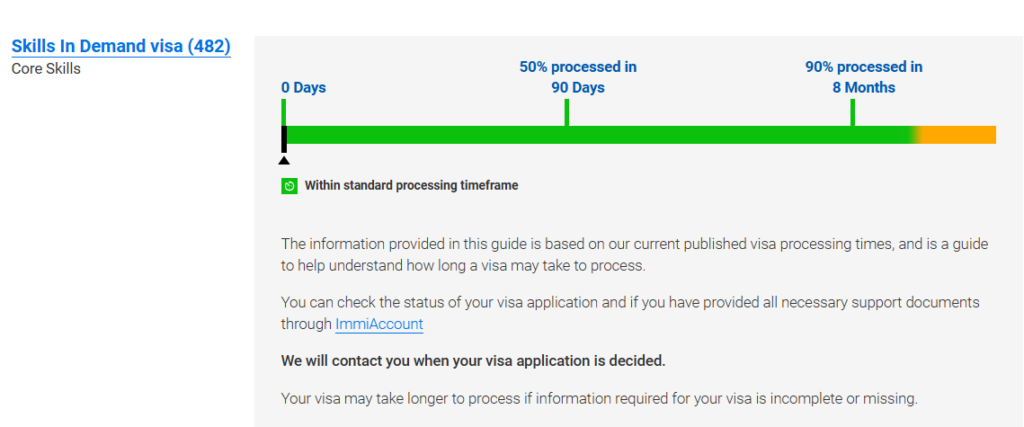
The Department of Home Affairs has updated its global visa processing times, with several employer-sponsored visa streams continuing to experience extended processing due to high application volumes. Below is a snapshot of the current indicative processing times.
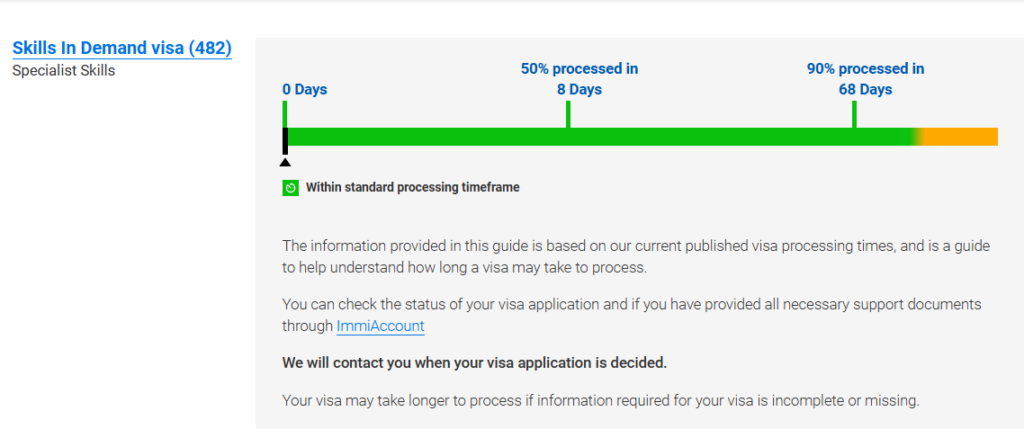
Skills in Demand Visa (Subclass 482)
Core Skills Stream:
- 50% of applications processed in 4 months
- 90% of applications processed in 7 months
Specialist Skills Stream:
- 50% of applications processed in 19 days
- 90% of applications processed in 63 days
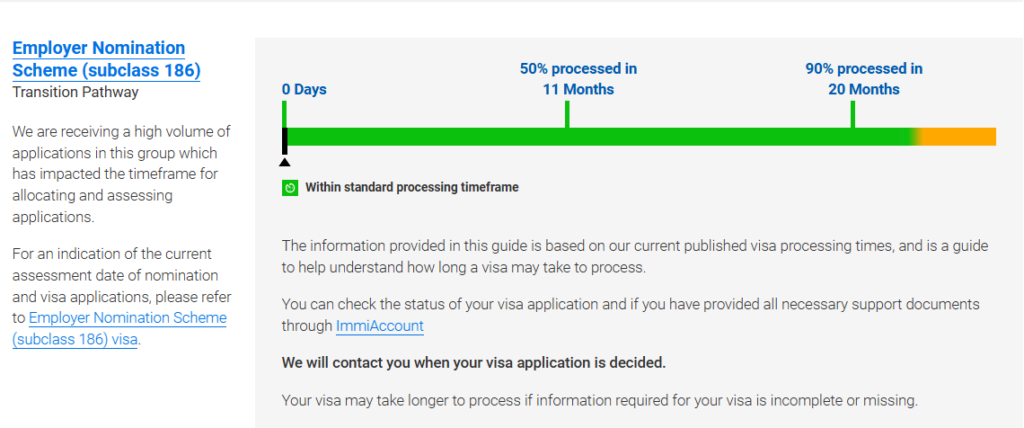
Employer Nomination Scheme Visa (Subclass 186)
Temporary Residence Transition (TRT) Stream:
- 50% of applications processed in 13 months
- 90% of applications processed in 20 months
Direct Entry (DE) Stream:
- 50% of applications processed in 14 months
- 90% of applications processed in 21 months
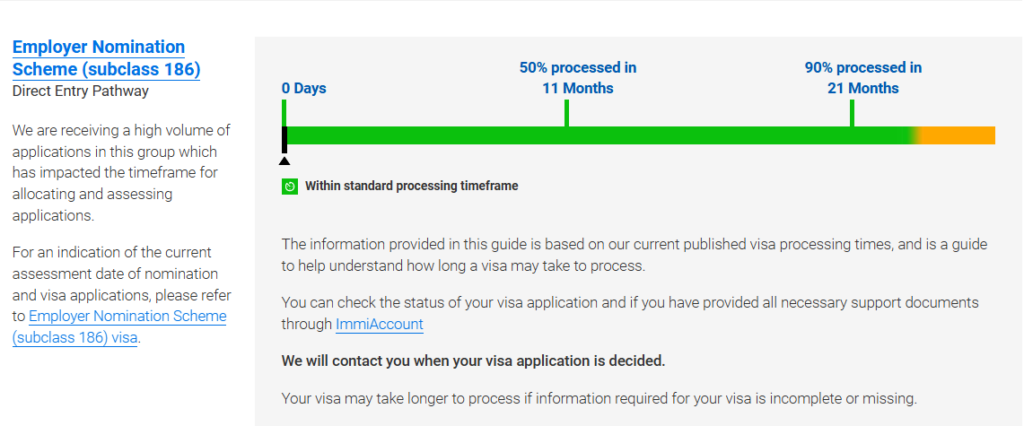
The Department has indicated that high application volumes are impacting the timeframe for allocating and assessing applications within the subclass 186 program.
Final Thoughts – From Us to You
March 2026 has been a strong reminder of how Australia’s migration system continues to evolve — shaped by global developments, legislative updates, and policy refinements that keep the framework dynamic and forward-looking. While some changes may appear complex, they also present opportunities for those who stay informed and ready to act.
As we step into the next month, staying flexible, aware, and proactive will continue to be key. With the right guidance and preparation, applicants, employers, and sponsors can navigate the migration landscape with confidence. No matter your pathway — temporary or permanent — the steps you take today can help unlock exciting opportunities for your future in Australia.
How We Can Help
We know the migration process can feel overwhelming, especially when policies shift and programs evolve.
At First Class Migration Australia, our experienced team is here to guide you through the process with up-to-date advice, tailored support, and a deep understanding of the Australian immigration system.
Got questions? Need help? Reach out at: